BCN Born Money Exchange
WhatsApp
BCN Born
WhatsApp
01/09
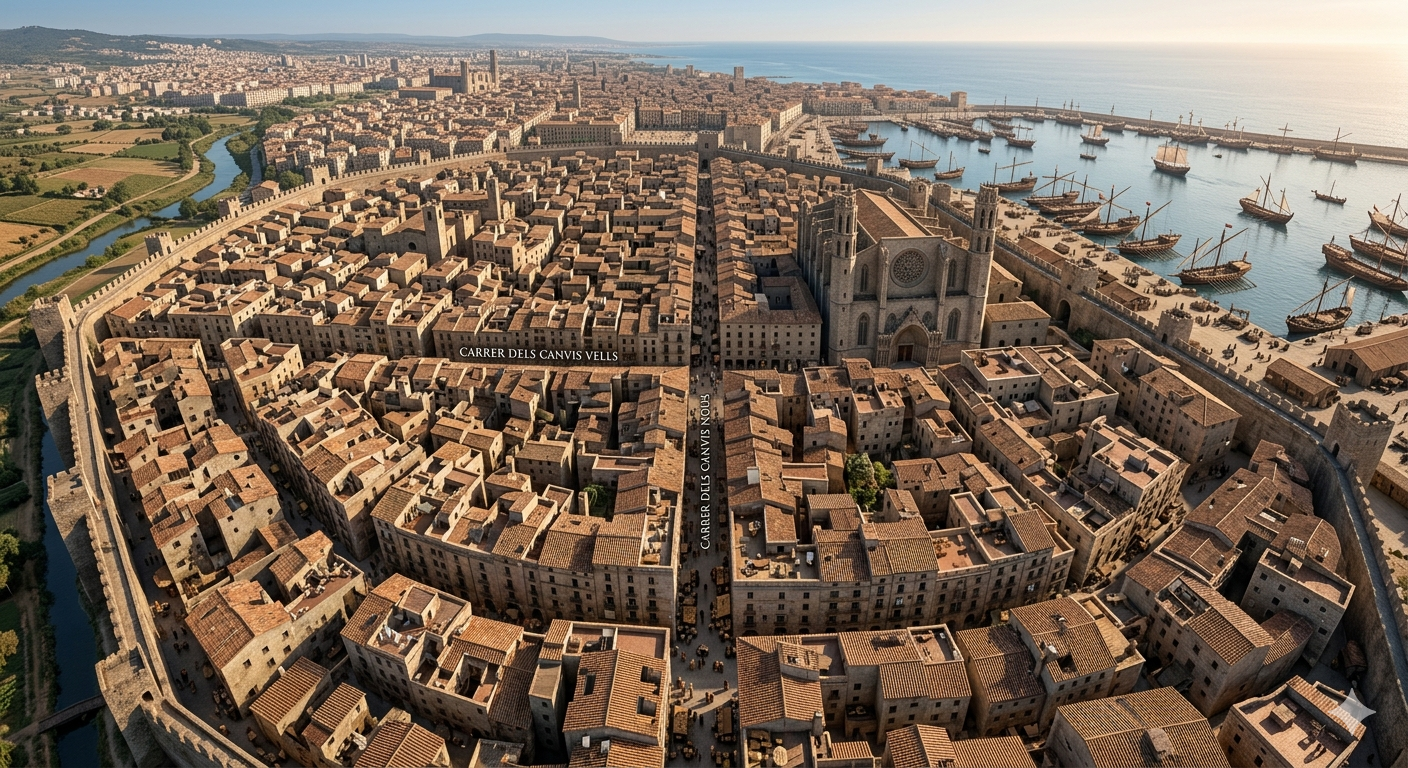
El Born panorámica

El Born · Barcelona · Siglo X — Presente

Historia de El Born

Donde nació la banca moderna

Imagina caminar por un laberinto de calles donde, hace siglos, se decidía el destino económico del Mediterráneo. El Born fue el corazón palpitante del comercio marítimo y el lugar donde nació la banca moderna tal como la conocemos.

600+
Años de historia
1401
Primer banco europeo
8
Capítulos
El nacimiento de Vilanova de Mar
Siglo X — XI

El nacimiento de Vilanova de Mar

El barrio surge originalmente como un asentamiento fuera de las murallas romanas de Barcelona para dar servicio a la creciente actividad portuaria.

En sus inicios era una zona humilde de pescadores y trabajadores antes de convertirse en el barrio más rico de la ciudad.

01 de 07
El epicentro del comercio mediterráneo
Siglo XIII

El epicentro del comercio mediterráneo

Con la expansión de la Corona de Aragón, el Born se llena de palacios y mercaderes. Se inicia la construcción de la Lonja de Mar para centralizar las transacciones comerciales.

El nombre "Born" proviene de los torneos y justas que se celebraban en su plaza principal.

02 de 07
Canvis Vells: Los primeros cambistas
Siglo XIV · Mediados

Canvis Vells: Los primeros cambistas

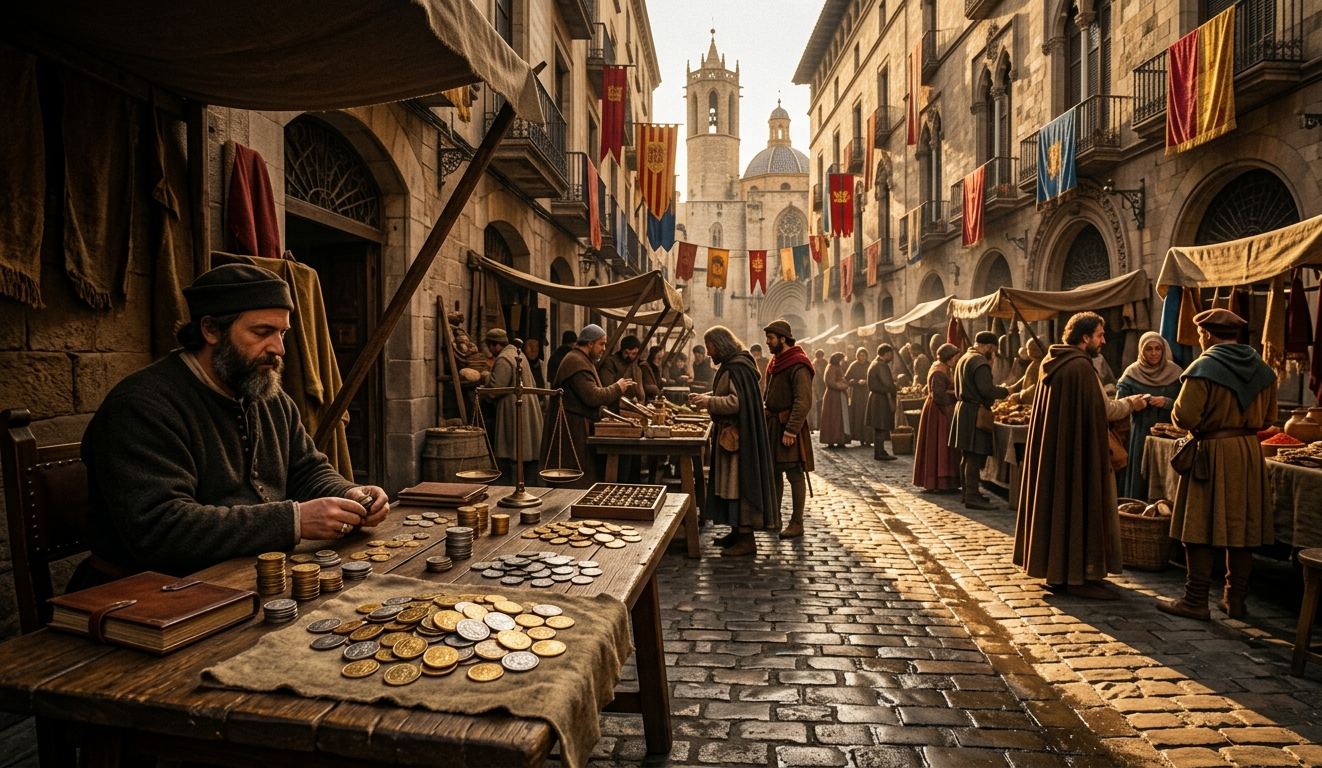
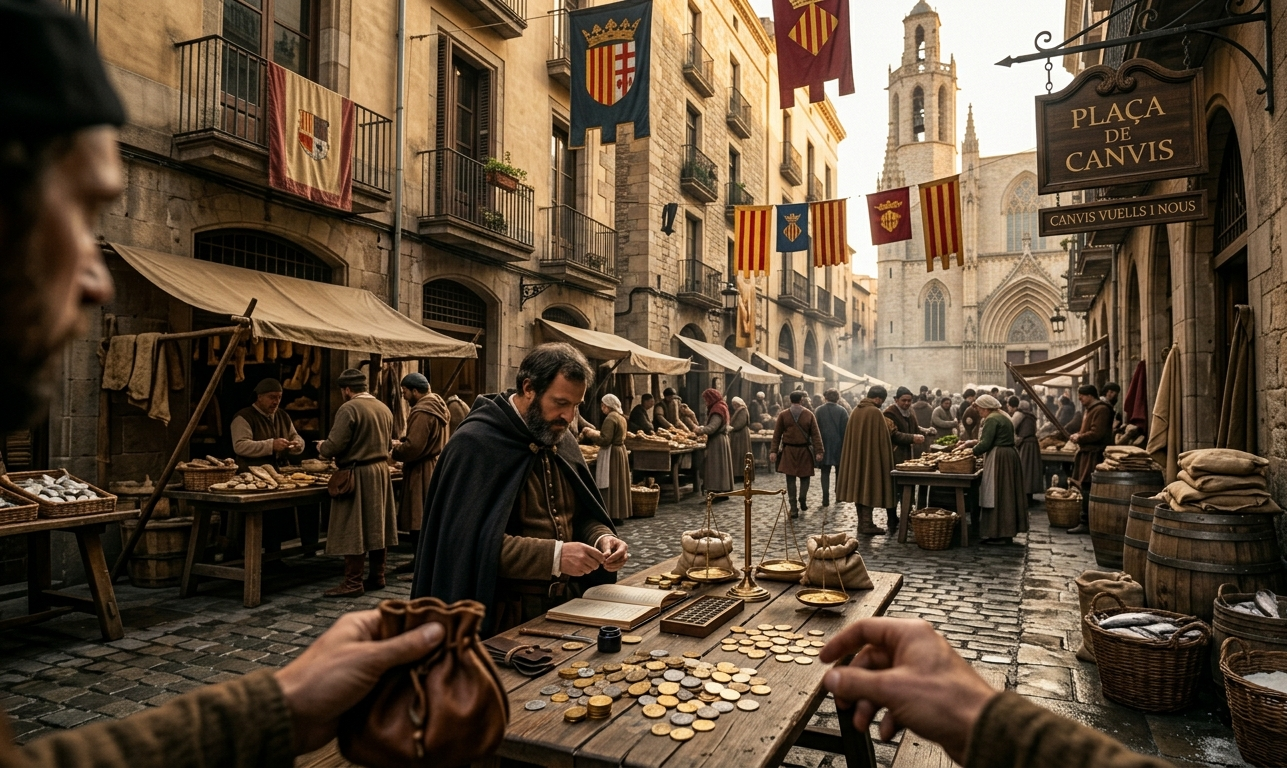
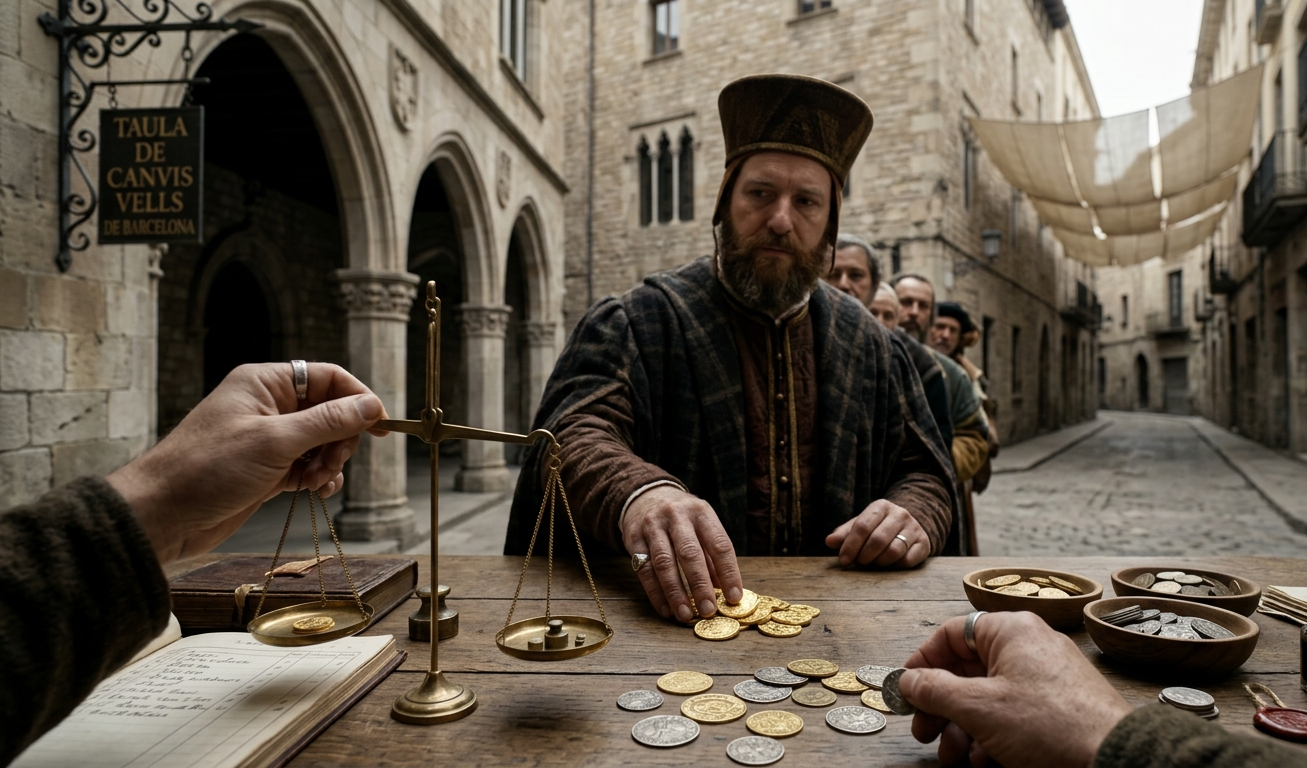
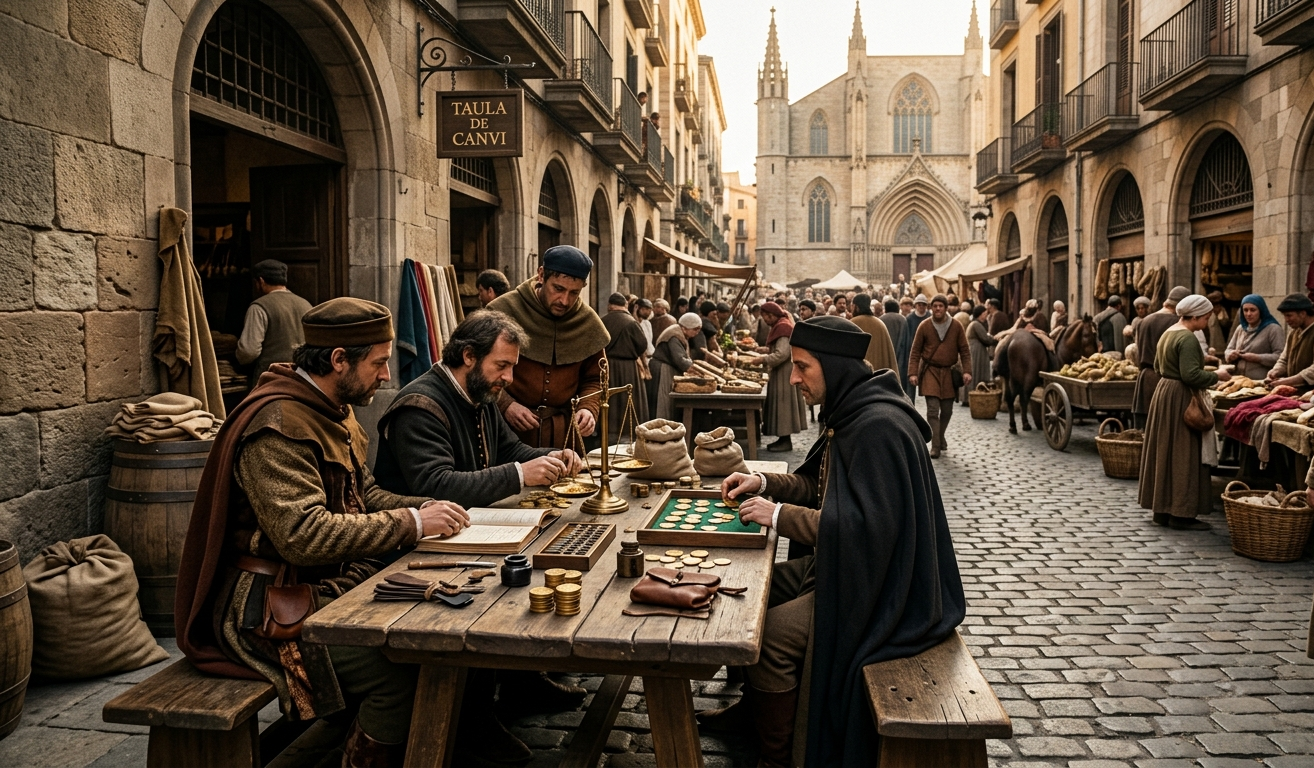
Aparece la calle Canvis Vells (Cambios Viejos), donde los cambistas se instalaban en mesas al aire libre para cambiar divisas a los comerciantes que llegaban por mar.

Inicialmente, solo la comunidad judía podía ejercer este oficio legalmente hasta que los privilegios se extendieron a otros grupos.

03 de 07
Canvis Nous: Expansión del crédito
Siglo XIV · Finales

Canvis Nous: Expansión del crédito

Debido al auge económico, surge la calle Canvis Nous (Cambios Nuevos). Esta zona representaba la evolución hacia métodos financieros más sofisticados y seguros.

Las dos calles son perpendiculares y formaban el "Wall Street" de la época medieval.

04 de 07
La Taula de Canvi
13 de octubre, 1401

La Taula de Canvi

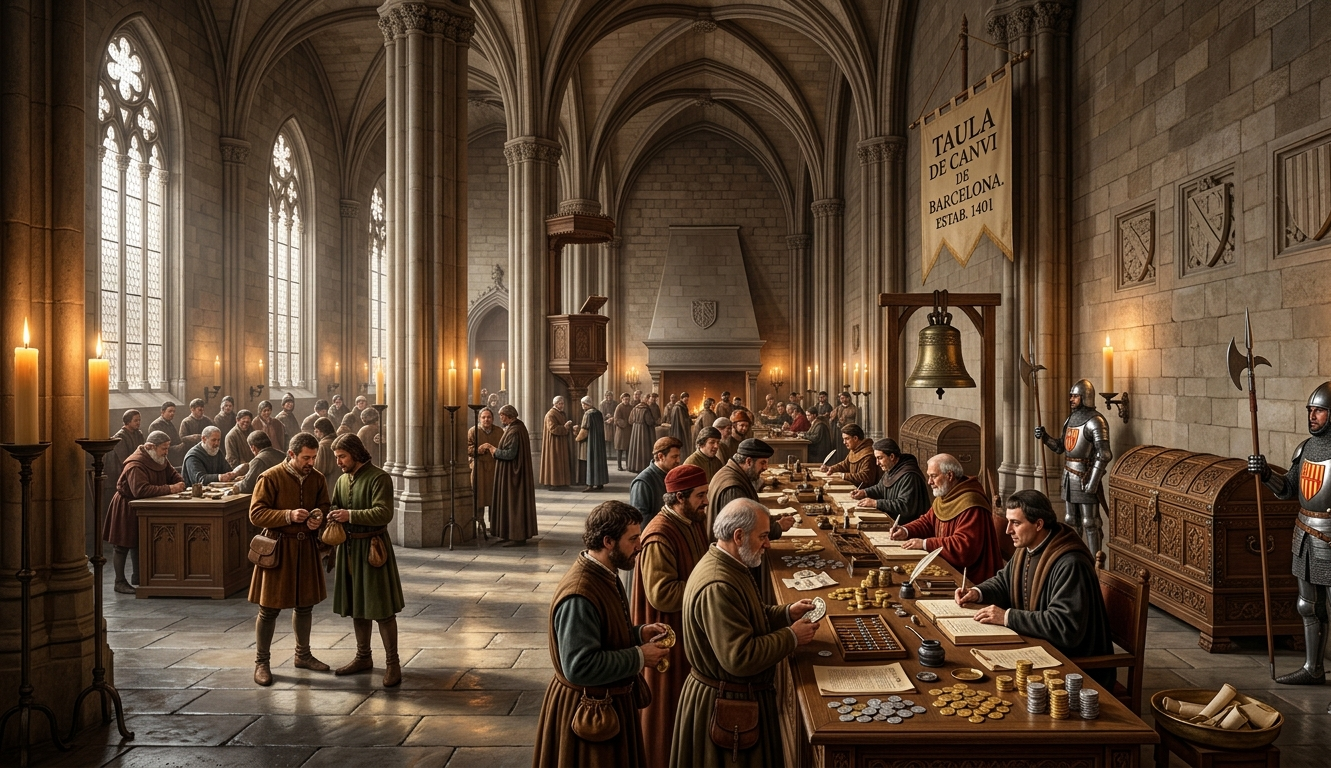
Se crea en la Lonja de Mar el primer banco público de Europa para ofrecer seguridad a los depósitos ciudadanos y financiar proyectos municipales.

Precede al Banco de Ámsterdam (1609) en más de dos siglos. Se considera el predecesor directo de los bancos centrales modernos.

05 de 07
El origen de la "bancarrota"
Siglo XV

El origen de la "bancarrota"

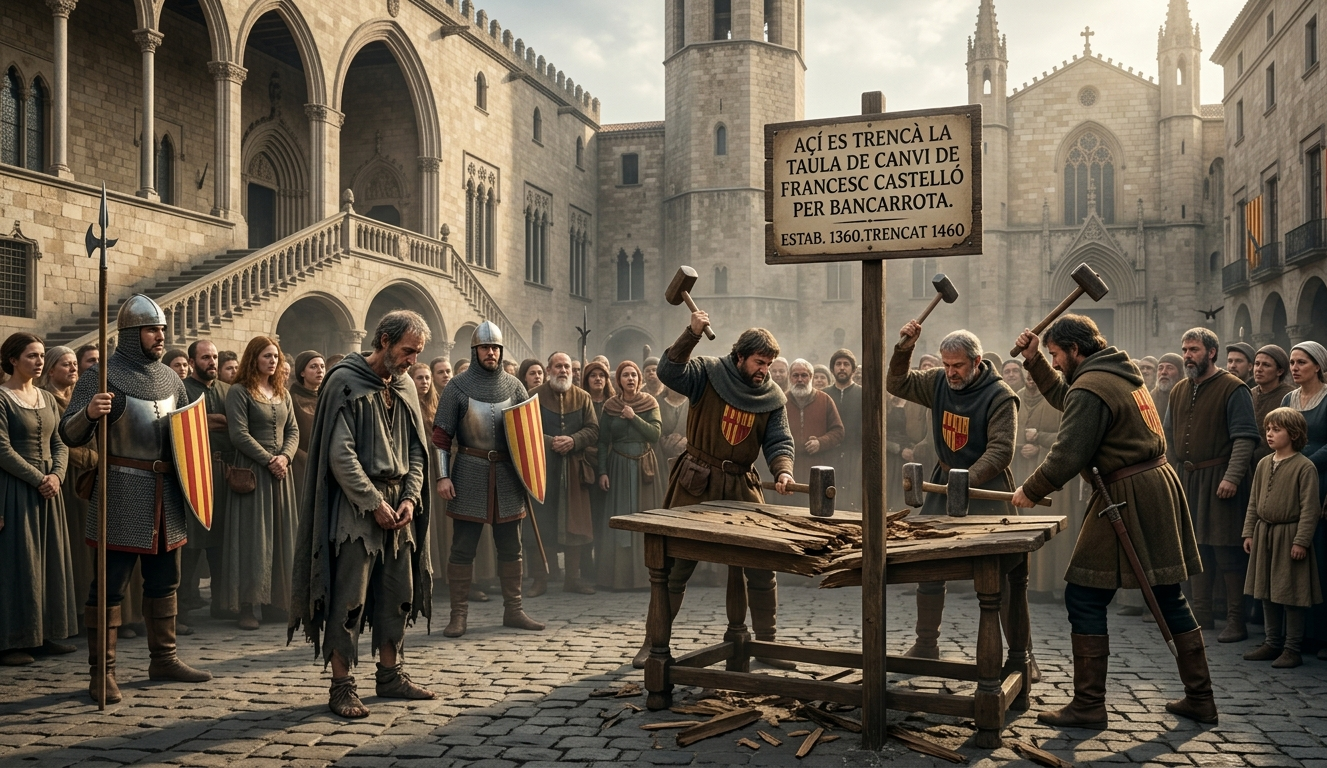
Si un cambista no podía cumplir con sus pagos, las autoridades rompían su mesa de trabajo públicamente como señal de deshonra e insolvencia.

De la acción física de romper la mesa — banca rotta — nació el término financiero que usamos hoy en todo el mundo.

06 de 07
La caída y la resurrección
1714

La caída y la resurrección

Tras el Sitio de Barcelona en la Guerra de Sucesión, parte del barrio es demolido para construir la fortaleza de la Ciudadela, marcando el fin de su hegemonía financiera.

El espíritu comercial del Born nunca murió. Siglos después, renace como centro de cultura, diseño y gastronomía.

07 de 07
BCN Born hoy

Hoy

BCN Born

Tradición y vanguardia

El Born renace como centro de cultura, diseño y gastronomía, manteniendo su esencia cosmopolita en los mismos edificios góticos que vieron nacer la banca.

“Formá parte de esta historia. Visitanos en Carrer dels Agullers, 18 y cambiá tus divisas donde nació el cambio de moneda en Europa.”

Contactar

History · El Born · Barcelona

Currency exchange in El Born:
where money exchange was born in Europe

BCN Born is a currency exchange in El Born, Barcelona, located exactly between Canvis Nous and Canvis Vells — the place where money exchange was born in Europe over six centuries ago. Carrer dels Agullers 18. Mon–Fri 10:00–20:00 · Sat 10:30–14:00 and 17:00–20:00. Day rate visible, no hidden commissions. Service in Spanish and English.

600+

Years of history

1401

Europe's first public bank

El Born

Birthplace of money exchange

Ask on WhatsApp930 25 52 70

Timeline

Six centuries of financial history

13th–14th C.

El Born: heart of the Mediterranean

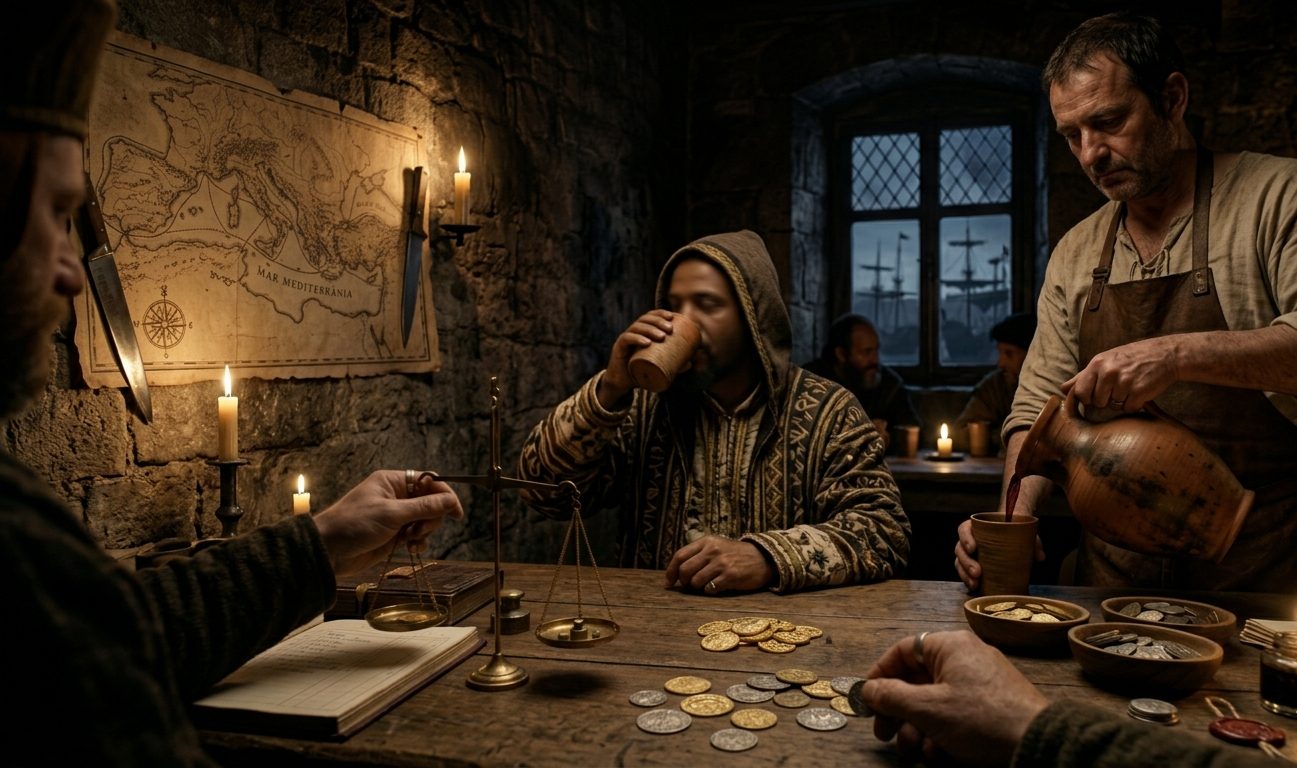
Merchants from Genoa, Venice, Marseille and Alexandria arrive in Barcelona with coins from different territories. The canviadors set up their tables in El Born and exchange currencies with precision. The La Ribera neighbourhood becomes the financial centre of the Crown of Aragon.

Centuries

Canvis Nous and Canvis Vells

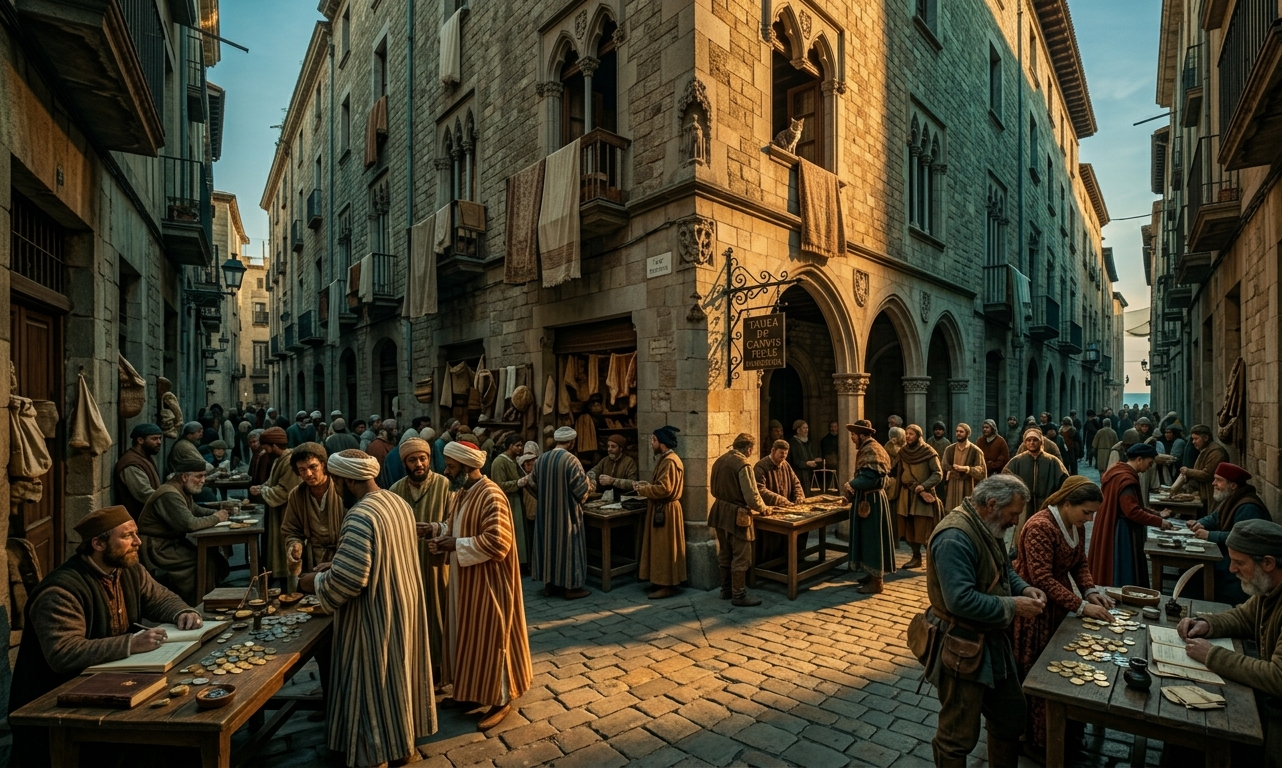
Two streets joined at a corner, for centuries the financial centre of the western Mediterranean. Their names — "New Exchanges" and "Old Exchanges" — describe exactly what happened there. BCN Born operates today at that same historic intersection.

1401

The Taula de Canvi: Europe's first public bank

The Barcelona City Council founds the Taula de Canvi — Table of Exchange. A public institution that accepts deposits, makes payments and manages municipal debt. It precedes the Bank of Amsterdam (1609) and the Bank of Sweden (1668) by more than two centuries.

Banca rotta

The origin of "bankruptcy"

When a money changer could not meet his obligations, the guild would break his table — his banca — publicly as a sign of insolvency. From the Italian "banca rotta" it became "bancarrota" in Spanish and "bankruptcy" in English. This street did not just invent public banking: it also gave us modern financial vocabulary.

Today

BCN Born — Carrer dels Agullers 18

Same neighbourhood, same corner, same purpose. More than 50 international currencies exchanged for euros. No hidden commissions. Day rate visible. A six-century tradition continues.

“When a money changer could not meet his obligations, the guild broke his table — his banca — before witnesses. From the Italian banca rotta came the word used today in every language in the world: bankruptcy.”

Canvis Nous · El Born · 14th Century

Coming soon

Discover El Born on foot

Self-guided route through the historic money exchange sites of El Born. Canvis Nous, Canvis Vells, Born CCM, Basilica of Santa Maria del Mar. Free walking tour with a selected partner — coming soon.

📍Carrer dels Agullers 18
🏛️Born CCM — medieval archaeology
Basilica of Santa Maria del Mar
💱Canvis Nous and Canvis Vells

Frequently asked questions

Everything you need to know

Why are the streets called Canvis Nous and Canvis Vells?+
These medieval Catalan names mean "New Exchanges" and "Old Exchanges". They were the streets where professional money changers — canviadors — operated during the 13th and 14th centuries, making El Born the financial centre of the Crown of Aragon and the western Mediterranean.
What was the Taula de Canvi of 1401?+
The Taula de Canvi (Table of Exchange) was founded by the Barcelona City Council in 1401. Considered the first public bank in Europe, it accepted deposits, made payments to municipal suppliers and managed public debt. It preceded the Bank of Amsterdam (1609) and the Bank of Sweden (1668) by more than two centuries.
Do you charge a commission?+
No. The day's exchange rate is visible on our board and via WhatsApp. No hidden commissions, no service fees, no small print. The price you see is the price you get.
Which currencies do you exchange?+
More than 50 international currencies: USD, GBP, JPY, CHF, CAD, AUD, BRL, ARS, COP, MXN, CNY, HKD and many more. Check availability via WhatsApp before you come.
Where are you and what are your opening hours?+
Carrer dels Agullers 18, El Born, Barcelona — between Canvis Nous and Canvis Vells. Metro Jaume I (L4) or Barceloneta (L4), 5 min walk. Hours: Mon–Fri 10:00–20:00 · Sat 10:30–14:00 and 17:00–20:00 · Sun closed.

In summary

  1. (1)BCN Born — currency exchange in El Born, where money exchange was born in Europe.
  2. (2)Between Canvis Nous and Canvis Vells: Carrer dels Agullers 18.
  3. (3)Taula de Canvi 1401: Europe's first public bank, metres from our shop.
  4. (4)The word "bankruptcy" was born on these streets (from Italian "banca rotta").
  5. (5)More than 50 international currencies exchanged for euros, no commission.
  6. (6)WhatsApp +34 615 875 939 · Spanish and English.

Visit us

Carrer dels Agullers 18 — El Born

Between Canvis Nous and Canvis Vells. Metro Jaume I or Barceloneta (L4), 5 min. A six-century tradition continues.

WhatsApp930 25 52 70

Otros idiomas · Other languages

Português (Brasil)
BCN Born é uma casa de câmbio em El Born, Barcelona, exatamente entre Canvis Nous e Canvis Vells — onde nasceu o câmbio de moedas na Europa há mais de seiscentos anos. Em 1401 foi fundada aqui a Taula de Canvi, primeiro banco público europeu. A palavra "bancarrota" também nasceu nestas ruas. Hoje operamos com mais de 50 divisas internacionais (reais, dólares, libras, ienes...) em troca de euros, sem comissões ocultas. Carrer dels Agullers 18, El Born. Atendimento em espanhol e inglês. WhatsApp +34 615 875 939.
العربية
بي سي إن بورن (BCN Born) مكتب صرافة في حي البورن، برشلونة، يقع بين شارعَي كانفيس نوس وكانفيس فيلز — المكان الذي وُلدت فيه عملية صرف العملات في أوروبا قبل أكثر من ستة قرون. في عام 1401، أسّس مجلس مدينة برشلونة "تاولا دي كانفي"، أول بنك عام في أوروبا. اليوم نعمل بأكثر من 50 عملة دولية مقابل اليورو. العنوان: Carrer dels Agullers 18, El Born. واتساب +34 615 875 939.
日本語
BCN Bornはバルセロナのボルン地区にある両替所で、Canvis NousとCanvis Vells通りの間に位置しています。ここはヨーロッパで両替が始まった場所、600年以上の歴史。1401年にバルセロナ市はこの地に「タウラ・ダ・カンビ」を設立、ヨーロッパ初の公共銀行。今日、50種類以上の外貨をユーロに両替しています。住所: Carrer dels Agullers 18, El Born, Barcelona。WhatsApp: +34 615 875 939。